Generate: AutoPasser
-
Hardware Engineer
-
Boston, MA
-
Jan. - April. 2023

Background: Generate is a client based, product design club at Northeastern that takes on multiple hardware and software projects every semester. My second project for Generate was AutoPasser: an automated hocky puck passer, intended to allow hockey players to practice receiving passes by themselves.
Task: I was in a small group of mechanical and electrical engineers for this project. My focus switched many times throughout the design but my key focus points were research and experimentation of flywheels, hockey puck loading system, and cable management for rotating systems.
Skills Learned/Used
-
3D Modeling and Prototyping
-
Design of Experiments
-
Group Collaboration and Time Management
Previous Work


Previous Work: This was a two semester long project with a team change in between. When I came in during semester 2, the work that had been finished can be seen above. This prototype stored up to 7 pucks and shot them at over 25 mph. The goals for our semester were to decrease the size of the machine while maintaining firing speed, design a turret system to change the angle at which pucks were fired, and to fully enclose the assembly.
Firing System


Top Speed Trial of 54 mph
The first major alteration from the previous firing system was the reduction of flywheel size from 8 inches to 4 inches. This facilitated a 42% decrease in major dimension length from around 19 inches to only 11 inches. The wheel material was also drastically changed from brittle plastic covered with a grip tape tread to a compliant polymer with a much lower durometer of 50A. This allowed for increased compression of the wheel, which facilitated a more efficient transfer of energy from the flywheels to the puck during firing. Three different durometers--30A, 50A, and 60A--were tested in 0.1" increments between the flywheels from 2.5" to 3" (the diameter of a standard hockey puck). Through this testing, it was determined that the 50A durometer wheels with a distance between flywheels of 2.5" was the most efficient in translating momentum without sacrificing structural integrity
Loading Column


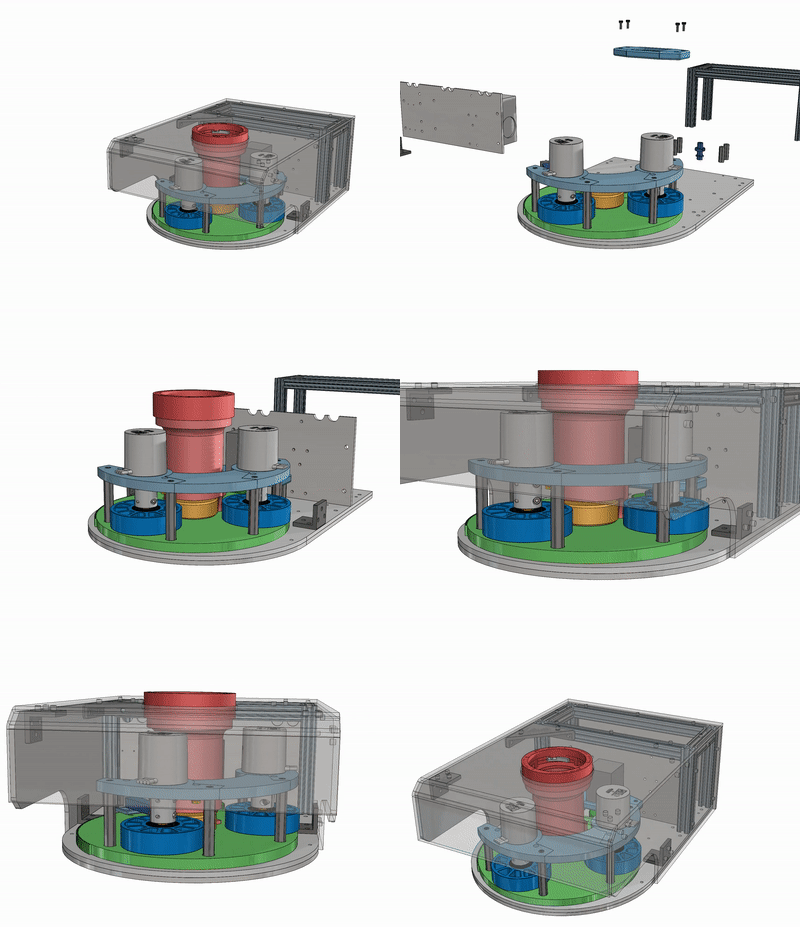
Loading Column: A "pucker upper" was designed in CAD and 3D printed using both FDM and SLA printing. This design increased puck capacity and was seamlessly removable from the rest of the system.